
Contracts, taught the way first year is taught.
All 49 video lectures are free, right here on this page. No sign-up needed: scroll down and press play. One doctrine per lecture, taught by Professor Ruth Castellano, with every case and statute checked against the primary source.

The whole course as a free book
Module 1 · Foundations

Why does the law enforce some promises and not others?
What a contract is, and why the law enforces bargains but not gifts. The common law and Article Two of the Uniform Commercial Code, and the predominant-purpose test for mixed deals. Bilateral and unilateral contracts.
Watch
What did they say, not what did they mean: the objective theory of assent
Assent is judged by outward words and acts as a reasonable person in the other party's position would understand them, not by secret intent, unless the other party knew the words were not meant.
Watch
How to read a contracts case
Posture, facts, question, holding, reasoning, disposition. Reading a case three times. Holding versus dictum; distinguishing versus overruling. Exemplar: Hawkins v. McGee (N.H. 1929), the promise of a perfect hand.
WatchModule 2 · Offer

What is an offer?
An offer hands the other party the power to close the bargain by saying yes: commitment, definite terms, an addressee. Statements of price and expressions of interest are negotiation, not offers.
Watch
Advertisements: when is a public statement an offer?
An advertisement is an invitation to deal unless it is clear, definite and explicit and leaves nothing open to negotiate.
Watch
How an offer dies: rejection, counter offer, revocation, lapse
The five ways a power of acceptance ends, and the line between a counter offer and a mere inquiry.
WatchModule 3 · Acceptance

Accepting by promise, accepting by doing
An offer may invite a return promise or a performance. Performance is acceptance, knowingly done, without advance notice where the offer dispenses with it, and beginning the invited performance makes the offer irrevocable.
Watch
When does acceptance take effect? The mailbox rule, and silence
An invited acceptance takes effect when it is sent; rejections and revocations when they arrive; crossing communications; and the narrow cases in which silence accepts.
Watch
Assent in the modern transaction: boxes, clicks and forms
An offeror may name the act that counts as acceptance; keeping goods, using software or clicking a button after reasonable notice of the terms is assent, but terms a reasonably prudent person would not have seen bind nobody.
WatchModule 4 · Consideration

What the law takes in exchange: the bargain
Consideration is what the promisor asks for and gets in exchange: a promise, a performance, or a forbearance. Benefit to the promisor is not required, and a recital of value is not value.
Watch
Adequacy, nominal consideration, and the pre-existing duty rule
Courts do not weigh a real exchange, but a sum named as a mere form is no exchange, and neither is a promise to do what one is already bound to do. Modifications survive when fair and unanticipated, or, for goods, without any consideration.
Watch
Past consideration, moral obligation, and the illusory promise
A promise made for a benefit already received has no consideration, and moral obligation alone does not supply it; a minority of courts enforce a later promise to pay for a material benefit the promisor himself received. A promise that leaves the promisor free not to perform is illusory, but reasonable efforts, express or implied, are real.
WatchModule 5 · Promissory estoppel

When reliance takes the place of a bargain
A promise the promisor should expect to induce reliance, which does induce it, is binding if injustice cannot otherwise be avoided. Not consideration: a separate ground with its own elements.
Watch
Reliance before the deal: bids, options and negotiations
An offer the offeror should expect to be relied on before acceptance, and which is relied on, cannot be revoked for a reasonable time so far as injustice requires; and a concrete assurance given in negotiations can bind its maker to the reliance losses it caused.
Watch
Limits and remedies: what the promisee gets
Section 90 enforces a promise only so far as required to prevent injustice, and the remedy may be limited as justice requires: reliance losses where the promise was indefinite, the value of the promise where it was definite and the loss provable.
WatchModule 6 · Definiteness and mutual assent

Definite enough to enforce: the terms a court needs
A contract needs terms definite enough for a court to know what was promised and give a remedy: a term left to one party's discretion fails, a term tied to an ascertainable standard stands, and for goods Article 2 supplies even an open price.
Watch
Agreements to agree
A term left to be agreed is no term: at common law an agreement to agree on a material term is unenforceable unless the agreement supplies a method or an outside standard, but where the parties clearly meant to be bound and their mechanism fails a court may set a reasonable term.
Watch
Letters of intent and preliminary agreements
A preliminary writing binds only if the parties objectively intended to be bound; 'subject to a definitive agreement' ordinarily denies it, a complete unqualified memorandum may support it, and a separate promise to negotiate in good faith is enforceable for reliance losses only.
WatchModule 7 · Statute of Frauds

Which promises need a writing, and what counts as one
Land, the one-year clause, suretyship, marriage, an executor's promise, and goods of $500 or more are unenforceable without a writing signed by the party to be charged; but the writing may be informal, may be several papers read together, and for goods need only show a contract and state the quantity.
Watch
The one-year rule and the land rule
The one-year provision catches only a contract whose own terms make performance within a year impossible; a contract for land needs a writing unless the buyer's reliance, known to the seller, makes conveyance the only just remedy.
Watch
Getting around the statute: estoppel, admissions and the Article Two exceptions
The statute yields to unjust enrichment or unconscionable injury from reliance, and for goods to a merchant's confirmation, specially manufactured goods, an admission in court, or goods paid for or accepted; a sworn denial ends the search for an admission.
WatchModule 8 · Interpretation and parol evidence

Whose meaning? Ambiguity and the reasonable reader
A contract's words carry the meaning a reasonable person in the other party's position would give them: a party who knows the other's meaning is held to it, a party urging an unusual meaning must prove it, and only a genuinely equivocal term that neither party had reason to understand the other's way makes no contract at all.
Watch
The parol evidence rule
When the parties make a writing the final expression of their agreement, earlier or contemporaneous agreements cannot contradict it, and if the writing is complete they cannot add to it; New York and California test completeness differently, and Article 2 admits course of dealing, usage and course of performance.
Watch
Reading the words: plain meaning, context, and the Kozinski objection
New York reads a written term by its plain meaning and admits outside evidence only for an ambiguity on the face; California admits evidence of any meaning the words are reasonably susceptible of but never to contradict them; for goods, express terms control but course of performance, course of dealing and usage of trade explain them.
WatchModule 9 · Conditions and performance

Conditions: what must happen before a duty is due
A condition is an event, not certain to occur, that must occur before a contractual duty comes due; if it fails, the duty never arises and no one is in breach. Express conditions are enforced strictly, but doubtful words are read as a promise or a timing term rather than a condition where a condition would forfeit one party's performance for a risk the other is better placed to bear.
Watch
Constructive conditions and substantial performance
Where promises are exchanged, each party's performance is an implied condition of the other's, satisfied by substantial performance: a trivial and innocent shortfall leaves the other party bound and liable only in damages, at the cost of repair unless that is grossly disproportionate and then at the difference in value; a wilful default forfeits the doctrine. For goods, tender must be perfect and the seller may cure (UCC §§ 2-601, 2-508).
Watch
Waiver, the order of performance, and what a defaulting party gets back
A condition that is an incident of performance rather than its consideration may be waived without new consideration, and once waived the forfeiture falls with it though damages remain. Where a contract for work is silent on payment, the work must be substantially performed before payment can be demanded. A party who defaults after part performance cannot sue on the contract but may recover in restitution the benefit conferred, up to the contract rate, less the damages caused.
WatchModule 10 · Breach and repudiation

Material breach: when the other side's failure lets you stop
Every unexcused failure to perform is a breach and gives damages, but only a material breach, judged by the benefit lost, the adequacy of damages, the breaching party's forfeiture, his prospects of cure and his good faith, excuses the other party from performing. A party who treats a minor breach as material and walks away has himself committed a material breach.
Watch
Anticipatory repudiation: breaking a promise before it is due
A party breaches before performance is due only by repudiating: a distinct, unequivocal and absolute refusal to perform, or an act that makes performance impossible. Doubtful statements and requests for cancellation are not enough. The injured party may treat the contract as ended and sue at once or await performance, and until he elects or relies the repudiating party may retract (UCC §§ 2-610, 2-611).
Watch
Adequate assurance: what to do when you fear the other side will not perform
When reasonable grounds for insecurity arise, a party may demand in writing adequate assurance of due performance and, if commercially reasonable, suspend its own performance until it comes; failure to give adequate assurance within a reasonable time not exceeding thirty days is a repudiation (UCC § 2-609; Restatement (Second) § 251). The demand must rest on objective grounds and may seek only assurance of the performance owed, not new security.
WatchModule 11 · Defenses

Capacity: minors and the mentally ill
A minor's contract, other than for necessaries, is voidable at the minor's option and may be disaffirmed by any act showing that intent; emancipation does not change the rule, and a lie about age binds the minor only in tort, if fraud is proved. A person who by reason of mental illness cannot understand a transaction, or cannot act reasonably in relation to it where the other party has reason to know of the illness, incurs only voidable duties.
Watch
Duress and undue influence: consent that was not free
A contract is voidable for duress where a wrongful threat, including a bad-faith threat to breach or to withhold an admitted debt, leaves the victim no reasonable alternative, and for undue influence where excessive pressure, applied so as to overcome the will without convincing the judgment, is brought to bear on a person unduly susceptible to it. Hard bargaining, good-faith disputes and second thoughts are none of these.
Watch
Misrepresentation and the duty to disclose
A contract is voidable where a party is induced by a false assertion of fact, which includes an opinion from someone with superior knowledge, a half truth and a false answer to a question, and by silence where the other party is mistaken about a basic assumption, where there is a relationship of trust, or where a home seller knows a material fact the buyer cannot see. Bare nondisclosure between equals is still not fraud.
Watch
Unconscionability and public policy: bargains the court will not enforce
A court may refuse to enforce a contract or clause that was unconscionable when made, meaning an absence of meaningful choice together with terms unreasonably favourable to the other party (UCC § 2-302), and will refuse to enforce a promise where the public policy against it clearly outweighs the interest in enforcement (Restatement (Second) § 178). Where only part of a term offends, a court may enforce the reasonable part but may not add to it (§ 184).
WatchModule 12 · Mistake and changed circumstances

Mistake: when both sides, or one side, got the facts wrong
A contract is voidable for a mutual mistake about a basic assumption on which it was made that materially affects the agreed exchange, unless the adversely affected party bears the risk by agreement, by conscious ignorance, or by the court's allocation (Restatement (Second) §§ 152, 154). A unilateral mistake is relieved only where the other party knew or had reason to know of it or enforcement would be unconscionable, and the mistaken party was not culpably negligent, gave prompt notice, and can restore the other side.
Watch
Impossibility and impracticability: when performance becomes too hard
Performance is excused where an unexpected contingency, the non-occurrence of which was a basic assumption of the contract, makes performance impracticable, meaning possible only at an excessive and unreasonable cost, and the risk of that contingency was not allocated to the promisor (UCC § 2-615; Restatement (Second) § 261). A fixed price allocates the risk of price change, increased cost alone is not enough, and a force majeure clause excuses only the events it names and their like.
Watch
Frustration of purpose: when performance is possible but pointless
Where an event the non-occurrence of which was a basic assumption of the contract substantially frustrates a party's principal purpose without his fault, his remaining duties are discharged, unless the risk was foreseeable and so tacitly assumed, allocated to him by the contract, or the value of the other side's performance is only reduced rather than destroyed (Restatement (Second) § 265). Discharge ends future duties; restitution adjusts what has already passed.
WatchModule 13 · Third parties

Third-party beneficiaries: who else can sue on a promise
A third person may enforce a promise made for his benefit where the promisee intended the performance to satisfy a debt to him or to make him a gift (a creditor or donee beneficiary), and everyone else who might gain from performance is an incidental beneficiary with no rights (Restatement (Second) § 302). Until the beneficiary relies, sues or assents, the parties may vary the promise, and the promisor keeps every defense he had against the promisee.
Watch
Intended or incidental: the limits of the beneficiary's claim
A person who would gain from performance is an intended beneficiary only where the parties meant the performance for him. A promisor who contracts with a government to serve the public is not liable to members of the public unless the contract, read in its circumstances, shows an intention that he compensate them, which courts find where the class is defined and the loss is the promised sum itself, and refuse where the liability would be unbounded and unpriced.
Watch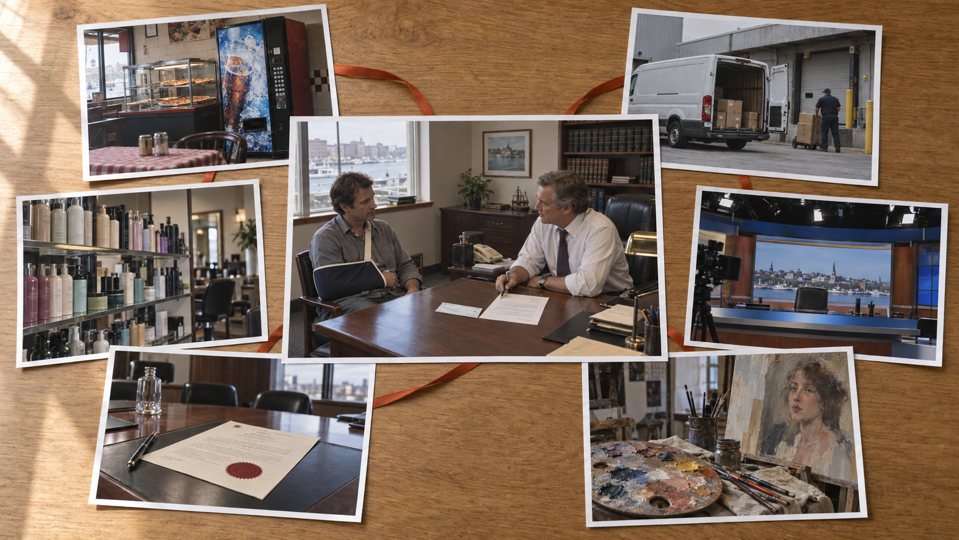
Assignment and delegation: putting a new party in
A contract right may be assigned by a manifestation of intent to transfer it without retained control, and an obligor with notice must perform to the assignee, unless the assignment would materially change his duty, burden or risk. A duty may be delegated unless the other party has a substantial interest in performance by the original promisor, who remains liable in any event (UCC § 2-210). The right to receive personal services is assignable; the duty to render them is not.
WatchModule 14 · Remedies

Expectation damages: the benefit of the bargain
Damages for breach put the injured party in the position performance would have put him, measured by the value to him of the promised performance less what he received, not by his expenditure or the defendant's saving, and never more than performance would have given. For defective or incomplete performance the measure is the cost of completion unless that cost is grossly disproportionate to the value it would add.
Watch
The limits on damages: foreseeability, certainty and mitigation
Expectation damages are limited to loss reasonably within the parties' contemplation when the contract was made, proved with reasonable certainty as to cause and amount, and not avoidable by reasonable effort. After a repudiation the plaintiff must stop and sue for costs to date plus lost profit; a discharged employee must take comparable work but not work of a different or inferior kind.
Watch
Reliance, restitution and the Code's measures
Where expectation cannot be proved or is inappropriate, the injured party may recover reliance expenditures, less any loss the defendant proves he would have suffered on performance, or restitution of the benefit conferred; a party in breach may recover restitution less the damages he caused. Under the UCC a buyer recovers cover or market damages plus consequential loss, and a seller recovers market damages or, where those are inadequate, lost profit (§§ 2-708, 2-712, 2-713).
Watch
Specific performance and agreed remedies
A court orders specific performance where damages are inadequate because the promised performance cannot be valued with confidence, and refuses it where the contract is too indefinite, supervision would be constant, the burden on the defendant would be disproportionate, or the promise is of personal service. Parties may liquidate damages at an amount that was a reasonable forecast of harm difficult to estimate, but a sum unreasonably large, or the same for every breach regardless of gravity, is void as a penalty (UCC § 2-718).
WatchModule 15 · Sales under the UCC

Warranties: express, merchantability and fitness
A seller's affirmation of fact, promise, description or sample that becomes part of the basis of the bargain is an express warranty, presumed part of the bargain without proof of reliance; mere opinion, commendation or value is not (UCC § 2-313). A merchant impliedly warrants that goods are merchantable, fit for their ordinary purposes as buyers of such goods reasonably expect (§ 2-314). A seller who has reason to know the buyer's particular purpose and reliance on the seller's skill or judgment impliedly warrants fitness for that purpose (§ 2-315).
Watch
Rejection, cure, acceptance and revocation
Before acceptance a buyer may reject goods that fail in any respect to conform (UCC § 2-601), by seasonable notice (§ 2-602), but the seller may cure within the contract time and, if he reasonably believed the tender acceptable, for a further reasonable time (§ 2-508). Acceptance (§ 2-606) ends the right to reject, obliges payment and notice of breach, and shifts the burden of proof (§ 2-607); the buyer may then revoke only for a nonconformity that substantially impairs the value to him (§ 2-608), and otherwise recovers damages for accepted goods, including foreseeable consequential loss (§§ 2-714, 2-715).
Watch
Disclaimers and limited remedies
A seller may exclude the implied warranty of merchantability only by language mentioning merchantability and, in a writing, conspicuous; fitness only by a conspicuous writing; or all implied warranties by 'as is' or like language; words creating an express warranty prevail over words negating it where the two cannot reasonably be reconciled (UCC § 2-316). Parties may limit remedies, but an exclusive remedy that fails of its essential purpose gives way to the Code's remedies, and a limitation of consequential damages fails if unconscionable, prima facie so for personal injury from consumer goods (§ 2-719).
WatchModule 16 · Review and exam technique

Review I. Formation, enforceability and defenses on the exam
How to answer a contracts essay question, worked through one invented sale-of-goods problem: identify governing law and the parties' status first; then take the issues in the order a court must decide them (formation, statute of frauds and the merchant confirmation, battle of the forms under UCC § 2-207, modification under § 2-209 and economic duress, impracticability under § 2-615 and force majeure); state each rule in its own words, apply it by naming the triggering facts, argue the facts that cut the other way, and only then conclude.
Watch
Review II. Performance, breach and remedies on the exam
The second half of the course on one invented construction-and-supply problem: sort the contracts by governing law (common law for the building, Article 2 for the steel); insecurity, adequate assurance and repudiation under UCC §§ 2-609 and 2-610, and cover under § 2-712; express conditions, substantial performance and forfeiture (Jacob & Youngs v. Kent); liquidated damages versus penalty (Lake River, Wassenaar); mitigation after repudiation (Rockingham County v. Luten Bridge); and building the remedy from expectation, cut by foreseeability, certainty and avoidability.
WatchQuizzes, scores and the study club
Each lecture has a five-question quiz with every answer explained. Quizzes and your scores live on the study club site, which needs a free account: club.firstyearlaw.com.